Thursday, December 8, 2016

LAD #21

Andrew Carnegie
In his essay titled the Gospel of Wealth written in 1889, Andrew Carnegie wrote that a society in which only a few have wealth was the most natural and efficient result of capitalism. He also wrote that the difference in lifestyle between the wealthy and the working class was greater than ever. This is not a bad thing, and is actually beneficial since it is important to have patrons of the arts who fill their homes with fine artwork and literature. He also wrote of the benefits of being wealthy - having wealth allows for a high quality of life, including an education.

Carnegie then discusses what to do with wealth - it can be given to descendants, donated, or spent. With great wealth comes responsibility - the newly wealthy, self-made upper class needed to be philanthropic, but it was dangerous to give money to groups that cannot mentally or emotionally handle it. Also, wealthy people need to set an example of modest living, and to consider any extra wealth as trust funds to be used to the betterment of their community. The final responsibility of the wealthy class is to help those with less by providing wisdom and experience.
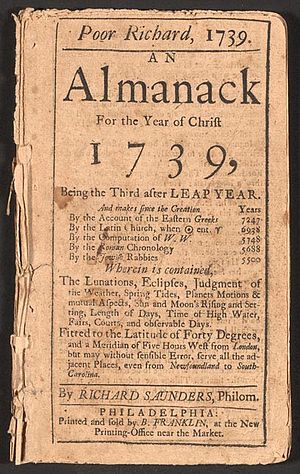
Poor Richard's Almanack
The Gospel of Wealth is similar to Poor Richard's Almanack, written by Benjamin Franklin. Both works contain advice and important information on how to be successful from a well-known and well-respected voice in society.

Tuesday, November 22, 2016

LAD #20

The text of the beginning of the proclamation
In the Emancipation Proclamation, Lincoln said that all slaves in the rebelling states would be free, but those in the border states would not be. He says these freed people should abstain from violence unless it is in self-defense, and should also find jobs so they can make "reasonable wages." In addition, Lincoln stated that executive government, including the military, will recognize the former slaves' freedom and will help maintain it.
President Woodrow Wilson
The proclamation is similar to Woodrow Wilson's address to the Senate announcing the passing of the 19th Amendment since in both instances, a previously oppressed minority is getting their rights expanded, as with the passing of the amendment, women earned suffrage.

LAD #19

President Lincoln
In his second inaugural address, President Lincoln said that the progress towards the end of the war was "encouraging" as the Civil War was in its final months. However, he did review how America got to this point, acknowledging that slavery was a principle cause of the war, and that extending slavery was why the southern "insurgents" threatened the Union by war. He says that the government only wanted to restrict the region in which slavery was allowed, implying that the actions of the southerners was not justified. He reminded Americans of how wrong they had been about what the war would be like when it began, saying that neither side thought the war would be as bad as it was, and that neither thought that the cause of the conflict (slavery) would be resolved with or even before the war ended. He finishes by saying that he hopes that, he hopes that Americans are able to work together and end the war soon and heal quickly, which would promote a "lasting peace among ourselves and with all nations."
President George Washington
Washington's Neutrality Proclamation is relatable to Lincoln's speech since both are advocating for a lasting peace, both in America and abroad.

Saturday, November 19, 2016

LAD #18

Dred Scott
In the Dred Scott decision, the Supreme Court ruled that Dred Scott is denied freedom since, as a slave, he is property and his owner could take him into any territory and Scott is still legally owned and therefore still a slave. In addition, Congress cannot ban slavery from any territory due to the Fifth Amendment, which states that a person cannot be deprived of property without due process or just compensation. In this case, Scott is property and therefore cannot be deprived from Sandford, his owner. Lastly, Scott was a slave, not a citizen, so he cannot sue in a Federal Court.
Supreme Court Chief Justice John Marshall, who decided Marbury v. Madison
This decision is similar to Marbury v. Madison since in both court cases, the Supreme Court assumes power over Congress. In Marbury v. Madison the Supreme Court established judicial review, allowing the Court to determine whether a law was constitutional or not, not Congress. In the Dred Scott decision, the Supreme Court ruled that Congress cannot declare slavery illegal.

Blog #17

Sojourner Truth
Sojourner Truth , in her "Ain't I A Woman?" speech, discusses how women should have equal rights as men. She references her history of work, doing what men do, yet she is treated worse than men are. She could eat as much as a man, yet she cannot. She says men are given more than women - their cup holds a quart while hers a pint, and it's mean not to let her have her full share. She argues against the claim that women can't have as much rights as men because Christ is a man, saying that he came from God and a woman. She finishes by saying that women are asking for their rights they deserve, and men better give them to women.
Martin Luther King Jr.
Truth's speech is similar to Martin Luther King Jr.'s "I Have a Dream" speech, since both Truth and King are asking for equal rights for the group they fight for, and their speeches are powerful through repetition - Truth by repeating "Ain't I a woman?" and King repeating "I have a dream."

Blog #16

Frederick Douglass
Douglass questions whether the freedom written in the Declaration of Independence extends to black people. He does not feel that black people are a part of the Fourth of July since they do not enjoy the independence that white men enjoy. Douglass says that the freedom that is being celebrated shows the disparity between whites and blacks, since everything that is celebrated, blacks don't have ("This Fourth of July is yours, not mine."). He goes so far as to say he is being mocked by being asked to speak during a time when independence is celebrated. He then discusses how wrong slavery is, since it robs men of their liberty. He continues, saying that to the American slave, the Fourth of July is a day that reveals the injustice and cruelty they are subject to. He goes to an extreme, saying there is not  nation on Earth guilty of worse practices than America is at this time.
An image depicting the Seneca Falls Convention
This speech is similar to the Seneca Falls Convention, since like Douglass, the women at the convention are speaking out against injustices they experience from white men in society.

LAD #15

Gettysburg National Cemetery
In the Gettysburg Address, Lincoln says that it is proper that a portion of the battlefield is dedicated as the final resting place of soldiers who fought in the Civil War. But, Lincoln says they cannot merely dedicate the ground - they must also devote themselves to the cause the people that will rest in that field fought for. These soldiers should not die in vain, but as the people who allowed America to be reborn, with greater freedom.
The World War II Memorial in Washington, D.C.
This address is reminiscent of war memorials across America. These memorials honor fallen soldiers in war who fought so their country could have the freedoms its people enjoy.