Saturday, March 25, 2017

LAD #36

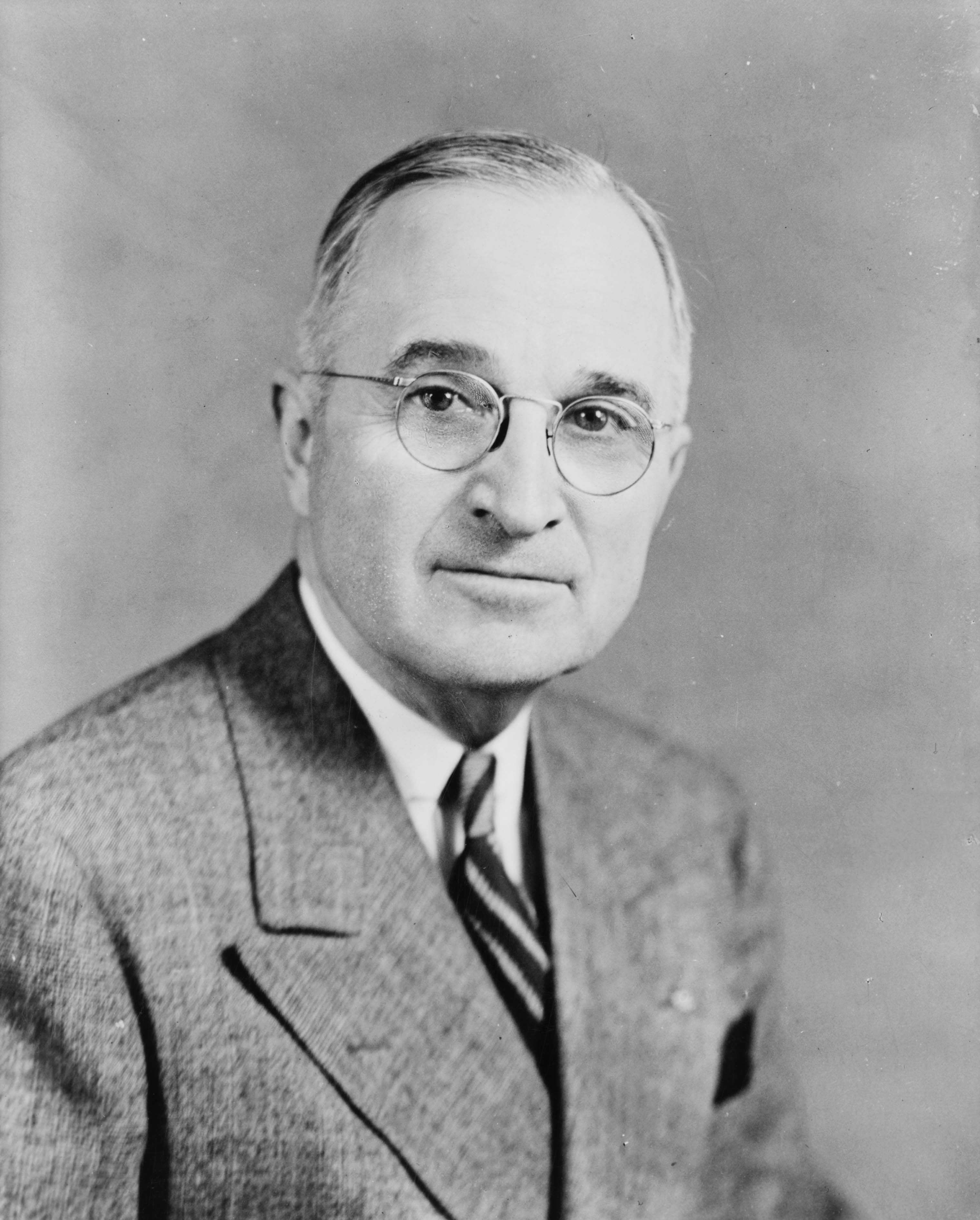
President Harry Truman
In the Truman Doctrine, President Truman promised to provide military and economic aid to any nation threatened by communism. Specifically, he looked for the US to provide aid for both Greece and Turkey, citing these nations due to their proximity to the Soviet Union. He acknowledged that the situation in Greece was not great, but it was the country's right to freedom. He discussed the amount it cost to help these nations was a fraction of a percent of what it cost to win World War II, so it was a reasonable request, especially since it would aid in providing freedom.
Secretary of State George Marshall, a leader in the implementation of the Marshall Plan and the man who it was named for.
The Truman Doctrine is similar to the Marshall Plan. Like the Doctrine, the Marshall Plan was designed to combat communism and aid European nations post-World War II. In both instances, the US provided money to European nations to help rebuild and prevent communism.

Thursday, March 9, 2017

LAD #35

A photo of Japanese people in an internment camp
By issuing Executive Order 9066 during WWII, President Roosevelt sent Japanese and Japanese-American people to internment camps. The order authorized the Secretary of War and the US military to declare military areas where anyone could be excluded. The order did not specify a nationality or ethnic group that it applied to, but was used to relocate Japanese people in America or Japanese-Americans to internment camps.
Charles Schenck

The order is similar to the Schenck v. United States case during WWI in which Charles Schenck was convicted for sending anti-war messages. In the case, the Supreme Court stated that freedom of speech could be restricted if the speaker is creating a danger to the country. Like Schenck, the Japanese that were sent to internment camps had their civil liberties restricted, as they were forced to leave their homes.

LAD #34

President Roosevelt
In his declaration of war, FDR said that the previous day, December 7, 1941, when the Japanese bombed Pearl Harbor, was "a date which will live in infamy." He stated that Japan and the US were working to maintain peace with Japan, however right after the bombing, the Japanese ambassador to the US gave a message saying that there was not necessary to keep trying to maintain peace, but did not mention any attack or threat. FDR then states that the attack was carefully planned, and discusses the various other attacks made by the Japanese. Given the aggression, there must be measures taken to defend the American people, so he asks Congress to declare war on Japan.

President Wilson

FDR's declaration of war is similar to Woodrow Wilson's declaration of war, which entered the US into WWI. Like the entrance into WWII, the entrance to WWI was provoked by actions from another nation, as the Germans sunk the Lusitania and sent the Zimmerman Telegram, which both threatened the safety of American people.

Saturday, March 4, 2017

LAD #33

President Roosevelt
In his first inaugural address, President Franklin D. Roosevelt promised a New Deal for the American people, and told them to face the truth, that the current times were tough. Yet FDR was also optimistic, and delivered his famous line of "the only thing we have to fear is fear itself," telling Americans, in the midst of the Great Depression, not to worry, and that they will get out of their misery, if they maintain hope and support the country's leaders - FDR considered the support essential to rescue the country from its tough times.
President Kennedy
FDR's address is similar to JFK's inaugural address since both contain a famous line (Kennedy's: "Ask not what your country can do for you, ask what you can do for your country.") and had an uplifting tone that garnered strong patriotic feelings and encouraged the American people to support the country and that everything will be okay as long as people don't worry and work hard for not only themselves, but each other.

Friday, March 3, 2017

LAD #32

Frank B. Kellogg
The Kellogg-Briand Peace Pact, also known as the Pact of Paris, was negotiated by Frank B. Kellogg, President Coolidge's Secretary of State, along with the French foreign minister. The pact made war illegal as a national policy, unless it was in defense (if a country was attacked), and was ratified by 62 nations. Kellogg won a Nobel Peace Prize for his role in negotiating the pact, although it was unrealistic to carry out, since wars could happen without being declared as wars (ex. "invasions").
President Woodrow Wilson, who negotiated the Treaty of Versailles
The pact is similar to the Treaty of Versailles, since like the Treaty of Versailles was useless in preventing World War II, since hatred between the countries involved continued, the Kellogg-Briand Peace Pact was useless in preventing future wars, since people easily got around the pact, by manipulating situations to make it seem like they were being attacked (so the war was defensive), or calling them "invasions," as mentioned before. Basically, the Treaty of Versailles and the peace pact had the same effect, but the effect was more specific for the Treaty of Versailles, since it was useless in preventing a specific war (World War II), while the pact was useless in preventing several future "wars," even if they weren't called wars.
Friday, February 10, 2017

LAD #31

Image result for woodrow wilson
President Woodrow Wilson
 
In his Fourteen Points Speech, President Woodrow Wilson outlined to Congress how he believed the world should achieve post-Great War peace. He expressed his desire for self-determination (freedom to make own government), freedom of the seas, and free trade, among several paybacks for the war. He reached out to Germany, hoping there could be peace instead of hatred after the war, and also discussed how he wanted a better world in which there were no disputes that required wars to solve.
(Left to right) The “Big Four”: David Lloyd George of Britain, Vittorio Orlando of Italy, Georges Clemenceau of France, and Woodrow Wilson of the United States, the principal architects of the Treaty of Versailles.
The "Big Four" negotiators of the treaty: David Lloyd George (Britain), Vittorio Orlando (Italy), Georges Clemenceau (France), and Wilson
Wilson's speech is similar to the Treaty of Versailles since both outlined how peace could be achieved after the Great War, and four of Wilson's Fourteen Points are present in the treaty. However, the Treaty of Versailles ended up punishing Germany severely (they were ultimately force to sign it), while Wilson hoped for peace with Germany.


Tuesday, February 7, 2017

LAD #30

Judge Oliver Wendell Holmes Jr.
In the Schenck v. United States case, Schenck sent a paper he wrote to draftees in which he articulated his belief that the draft was wrong, urging the draftees "not to submit to intimidation." He was charged with conspiracy to violate the Espionage Act (law stating it was a crime to mail or print information that inspires a movement against the war effort or promoted enemies), since he encouraged insubordination in the military, and tried to reduce the amount of people in the military (this was the "movement against the war effort" he inspired). Justice Holmes concluded that Schenck is not protected, and his words created a "clear and present danger . . . that Congress [had] a right to prevent. He also said that words that may be tolerable in peacetime can be punished during wartime, since they cause an increased threat in these times - in other words, in wartime, there can be a greater restriction of free speech since there are greater dangers that could happen. In the court's eyes, Schenck's words created a dangerous situation for the US since he discouraged war and tried to weakened the military, so Congress had the right to prevent him from doing so.
John Peter Zenger
This trial is similar to the John Peter Zenger trial since like Schenck, Zenger was trialed for speaking out against the government. Zenger inspired the free speech that Schenck believed he was protected by, however Zenger was acquitted while Schenck was convicted.